
What Is a Non-Warrantable Condo? What Every Arizona Home Buyer Needs to Know
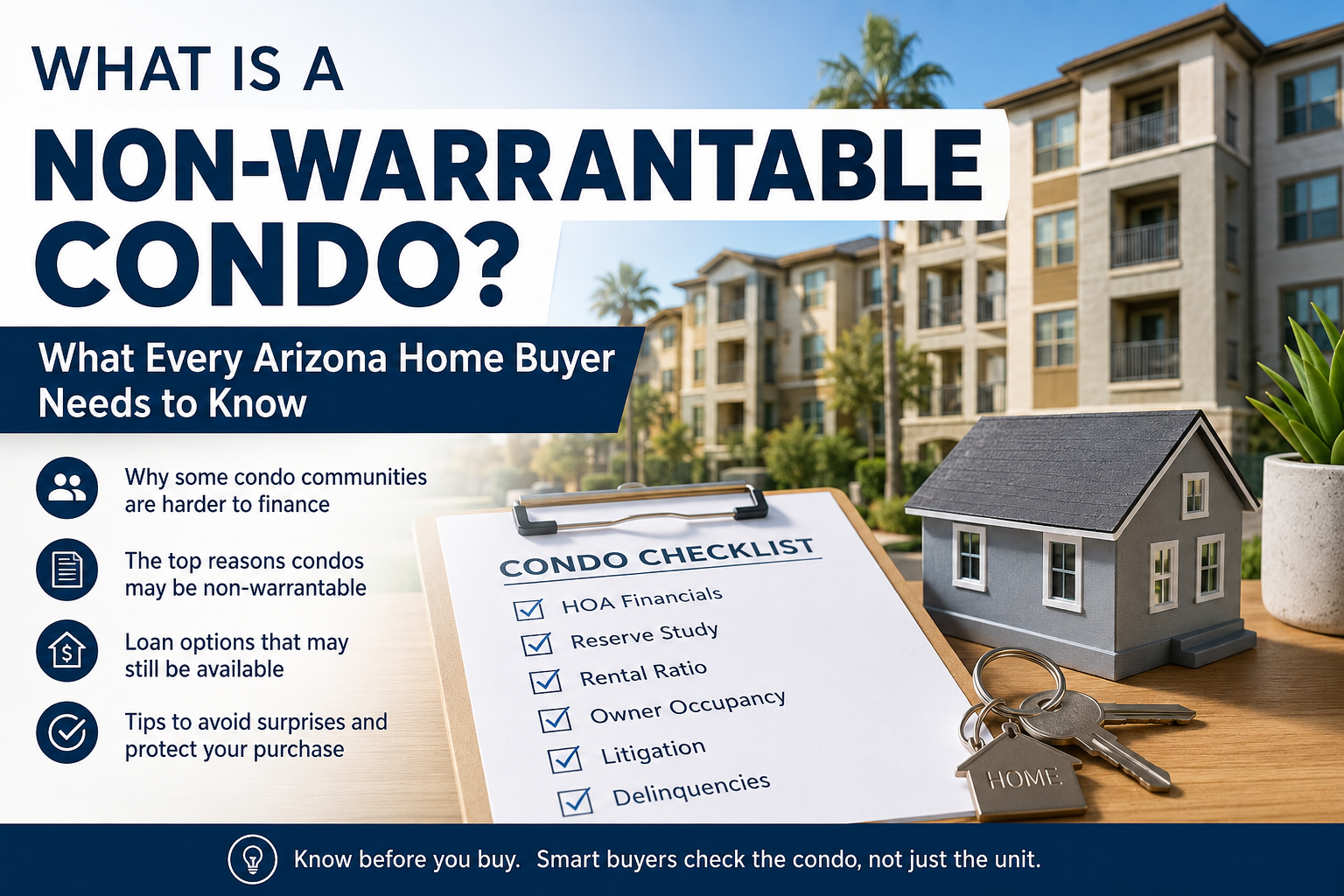
Shopping for a condo can be exciting. They often offer a more affordable price point, convenient locations, and lower-maintenance living compared to single-family homes. But there is one financing hurdle that catches many buyers completely off guard: a non-warrantable condo.
The surprising part? The problem often has nothing to do with your credit score, income, or financial qualifications. Instead, it comes down to the condo community itself.
In this Real Estate Tip Tuesday, Team EvoAZ Associate Broker Katie Halle Lambert and Mortgage Expert Ryan Gilliam explain what makes a condo non-warrantable, why it matters, and what buyers can do if they find the perfect condo that doesn't qualify for conventional financing.
What Is a Non-Warrantable Condo?
A non-warrantable condo is a condominium that does not meet the lending guidelines established by Fannie Mae or Freddie Mac for conventional financing.
When you're buying a condo, lenders don't just evaluate the buyer. They also evaluate the entire condominium project.
If both the buyer and the condo project meet the lending requirements, the property is considered warrantable, making it eligible for conventional mortgage financing.
If the condo project fails to meet those requirements, it becomes non-warrantable, which limits financing options for potential buyers.
Why Would a Condo Be Considered Non-Warrantable?
Several factors can cause a condominium community to lose its warrantable status. Some of the most common reasons include:
Too Many Rental Units
Lenders generally prefer communities where a majority of owners actually live in their units.
When a large percentage of units are investor-owned and rented out, lenders may view the project as carrying more risk.
One Owner Controls Too Many Units
If one individual or company owns a significant number of condos within the same community, the financial stability of the project may depend too heavily on that single owner.
Many conventional lenders consider this a red flag.
Ongoing HOA Litigation
If the homeowners association (HOA) is involved in a lawsuit, especially one related to structural issues, safety concerns, or construction defects, many lenders will immediately pause financing until the litigation is resolved.
This is one of the fastest ways for a condo project to become non-warrantable.
Inadequate HOA Financial Reserves
Healthy HOA finances are important.
Lenders want to see that the association is setting aside enough money for future maintenance and repairs while also maintaining low delinquency rates among homeowners paying HOA dues.
An underfunded HOA can create additional financial risk for the entire community.
Does Non-Warrantable Mean You Can't Buy the Condo?
Absolutely not.
One of the biggest misconceptions is that a non-warrantable condo cannot be financed.
In reality, it simply means that traditional conventional financing may not be available.
Many lenders offer portfolio loans or non-qualified mortgage (Non-QM) loan programs specifically designed for non-warrantable condos.
These loan options may require:
A larger down payment
Slightly higher interest rates
Additional documentation during underwriting
While financing may look different, buying the condo is often still possible.
How Buyers Can Protect Themselves
If you're seriously considering purchasing a condo, it's important to investigate the project's financing eligibility as early as possible.
Rather than waiting until you're close to closing, ask your lender to review the condominium project immediately.
Important documents include:
Condo questionnaire
HOA financial statements
Reserve studies
HOA governing documents
Information about pending litigation
Some HOAs charge a fee to provide these documents, but reviewing them early can help avoid unexpected financing issues later in the transaction.
Why Working With the Right Team Matters
Condo purchases involve more than choosing a floor plan or neighborhood.
The financial health of the entire community can affect your ability to obtain financing, even if you are an exceptionally qualified buyer.
Working with an experienced real estate professional and a knowledgeable mortgage lender helps identify potential issues before they become costly surprises.
By reviewing condo documentation early, buyers have more time to explore financing alternatives if needed and can move through the home-buying process with greater confidence.
Prefer to Watch Instead?
Watch this episode of Real Estate Tip Tuesday to learn what a non-warrantable condo is, why financing can be more challenging, and what Arizona home buyers should know before making an offer.
Have Questions About Buying or Selling a Home?
Whether you're buying your first home, selling your current one, or exploring your options, Team EvoAZ is here to help guide you through the real estate process.
Katie Halle Lambert | Team EvoAZ
Text ConnectWithKatie to 480-508-9828
Have Questions About Your Mortgage?
Whether you're purchasing your first home, refinancing, or simply have questions about your financing options, Ryan is here to help.
Ryan Gilliam | Your Best Mortgage
Text ConnectWithRyan to 480-508-9828
