
Arizona Data Centers: What Could They Mean for Nearby Homes?
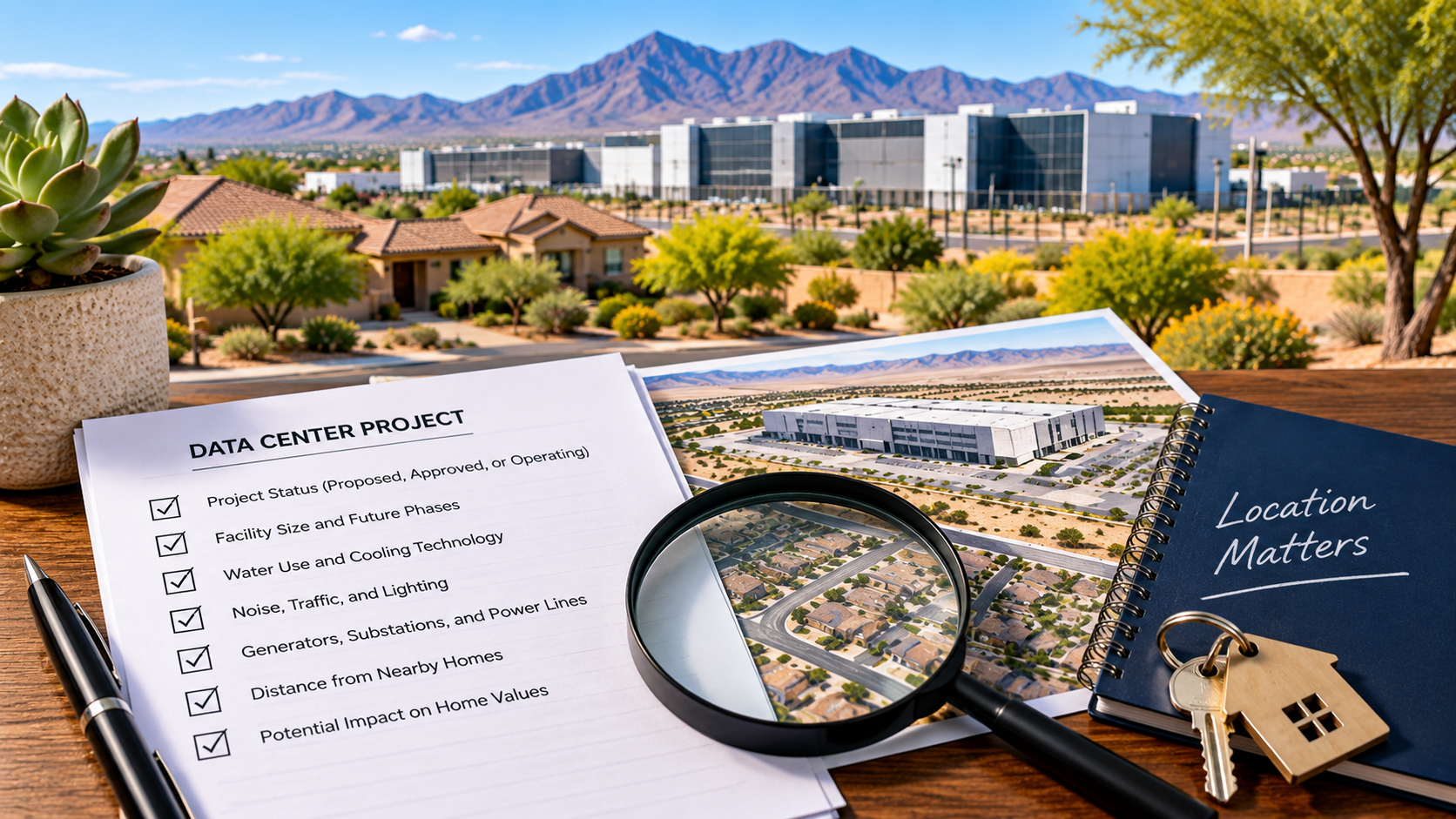
Data centers are expanding across Arizona, and homeowners are starting to ask a very real question: What could this mean for my home?
In this Real Estate Tip Tuesday episode, Katie Halle Lambert, Associate Broker with Team EvoAZ at eXp Realty, and Ryan Gilliam with Your Best Mortgage discuss some of the concerns residents are raising and what buyers, sellers, and current homeowners should investigate before making a real estate decision near a proposed or existing data center.
This isn't about assuming a data center will be good or bad for a neighborhood. It's about doing your due diligence, understanding what's actually happening, and separating verified information from rumors.
What Are Homeowners Concerned About?
As more data centers are proposed and built across Arizona, several concerns are coming up in conversations with homeowners.
Some of the biggest include:
Heat generated by cooling systems
Water use
Electricity demand and potential utility impacts
Mechanical and low-frequency noise
Construction traffic and disruption
Long-term traffic patterns
Large buildings, substations, generators, and power lines
Visual impact
Resale value
Future buyer perception
Some concerns may be reduced by newer technology, but not every question has a clear answer yet. Different facilities can also use different cooling systems and infrastructure.
That's why the details of the specific project matter.
What Should Buyers Investigate Before Purchasing Near a Data Center?
If you're buying a home near a proposed or existing data center, one of the first things to determine is what has actually been approved.
Is the project really moving forward? Is it still only proposed? Is what you're hearing based on official information, or did it come from social media or neighborhood chatter?
Before making a decision, investigate questions such as:
-
Find out whether the project is proposed, approved, under construction, or already operating.
Don't assume that everything you've heard about a future development is guaranteed to happen exactly as described.
-
Look beyond the first phase.
How large could the complete project eventually become? Are future phases planned?
It's also worth investigating how nearby vacant land is currently zoned and what could potentially be developed there.
-
Find out where major components of the project are expected to be located, including:
Generators
Cooling equipment
Substations
Power lines
Truck entrances
The relationship between that infrastructure and the specific home you're considering could matter.
-
If you're considering a home near an existing data center, don't rely on a single visit.
Go back at different times of day and pay attention to the things that matter to you.
Listen to the sound. Watch the traffic. Look at the lighting and views.
A buyer's comfort level with these factors is personal, so experiencing the neighborhood yourself can be an important part of your due diligence.
Think About Future Buyer Perception
Even if you're personally comfortable living near a data center, it's worth thinking ahead.
How might a future buyer feel about the same location?
That's especially important because there isn't definitive long-term property value data available yet to tell homeowners exactly how every data center will affect surrounding residential property.
Future buyer perception can matter.
That doesn't mean you should assume a home's value will decline simply because a data center is nearby. It means proximity to the facility is another factor worth considering when you're evaluating a property and thinking about future resale.
Could Data Centers Affect Local Housing Demand?
Another part of the conversation is employment.
Building a large data center can require electricians, plumbers, HVAC technicians, engineers, construction workers, and other skilled professionals.
But the employment picture can change once construction is finished.
As Ryan discussed in the episode, the number of workers needed to construct a facility can be much greater than the number needed to operate it afterward.
For homeowners and sellers, that creates an important question:
Will housing demand associated with a project continue after construction, or could some of that demand be temporary?
The answer may depend on the specific project and surrounding market.
What About Appraisals Near Data Centers?
From a lending and appraisal perspective, Ryan explained that homes near data centers aren't currently being treated with an automatic data-center-specific adjustment.
However, appraisers already consider outside influences that can affect a property, including factors such as traffic and proximity to certain commercial uses.
As more data centers are completed and more nearby homes sell, there may eventually be additional market data showing how buyers respond to particular locations.
For now, it's another reason to evaluate the individual property and surrounding neighborhood rather than making a blanket assumption.
What Should Sellers Near a Data Center Know?
This isn't only a buyer issue.
If you're selling a home near a proposed, future, or existing data center, you should also understand what buyers are likely to see and discover when researching your property.
Know whether the project is:
Proposed
Approved
Under construction
Operating
You should also know approximately how far the project is from your home and whether future phases are planned.
Then pay close attention to buyer feedback during showings.
If you're repeatedly hearing the same concern from potential buyers, that's information worth discussing with your listing agent.
Sellers Should Stick to the Facts
One of Katie's biggest cautions for sellers is not to make promises about what will happen in the future.
Don't promise that property values will never be affected.
Don't promise that future buyers will never hear or see the facility.
Instead, focus on what you can actually evaluate:
Comparable sales
Days on market
Seller concessions
Current competition
Buyer feedback
What's happening in your specific neighborhood
A good listing strategy should be based on the market you're actually experiencing, not predictions about what may or may not happen years from now.
What If You Already Own a Home Near a Proposed Data Center?
Maybe you're not buying or selling at all.
You already own your home, and now you've learned that a data center may be proposed nearby.
Katie's advice is to get involved early.
Attend neighborhood meetings and city hearings. Find out who the assigned planner is. Contact your city council representative when appropriate. Most importantly, ask specific questions.
You may want to investigate:
Water use
Cooling systems and technology
Noise testing
Generator locations
Construction hours
Truck routes
Traffic impacts
Setbacks
Power infrastructure
Future expansion plans
If you're near a school, for example, you might want to know whether construction traffic or truck routes could interfere with school pickup and drop-off times.
The goal is to get beyond general statements and understand how the actual project could affect your immediate area.
What Arizona Homeowners Should Take Away
Data center development raises questions about economic growth, jobs, water and power infrastructure, and the concerns of nearby communities.
For Arizona buyers, sellers, and homeowners, the biggest takeaway from this conversation is simple:
Know the facts before making your decision.
Find out what's proposed versus what's actually approved. Investigate the size of the project, future phases, infrastructure, traffic, noise, water use, and other factors that could matter to you.
And when you're considering a real estate transaction, think about both your comfort level today and how future buyers might perceive the location.
Social media can be a useful place to hear about something happening in your community, but it shouldn't be the end of your research.
Ask questions. Talk to the appropriate people. Look at the actual project information. Then decide what level of risk or uncertainty you're comfortable with.
Prefer to Watch Instead?
Watch this episode of Real Estate Tip Tuesday to learn what Arizona data centers could mean for nearby homes, the concerns buyers and homeowners should investigate, and what to consider about noise, traffic, water use, infrastructure, and future resale value.
Have Questions About Buying or Selling a Home?
Team EvoAZ can help you navigate the real estate side of your purchase and understand the documents and deadlines that come with an Arizona home transaction.
Katie Halle Lambert | Team EvoAZ
Text ConnectWithKatie to 480-508-9828
Have Questions About Your Mortgage?
Whether you're purchasing your first home, refinancing, or simply have questions about your financing options, Ryan is here to help.
Ryan Gilliam | Your Best Mortgage
Text ConnectWithRyan to 480-508-9828
